
The documented sizes
| What | Inches | Basis |
|---|---|---|
| Typical wild catch | 23.6 | Common length, 60 cm |
| Captive male, age 9 | 37 | Measured |
| Captive female, age 9 | 46 | Measured |
| Largest measured by science | 53.1 | 134 to 135 cm |
| IGFA world record | 55.4 | 123 lb 7 oz, Brazil, 2010 |
| The "1.8 m" figure | 70.9 | Repeated online, never measured |
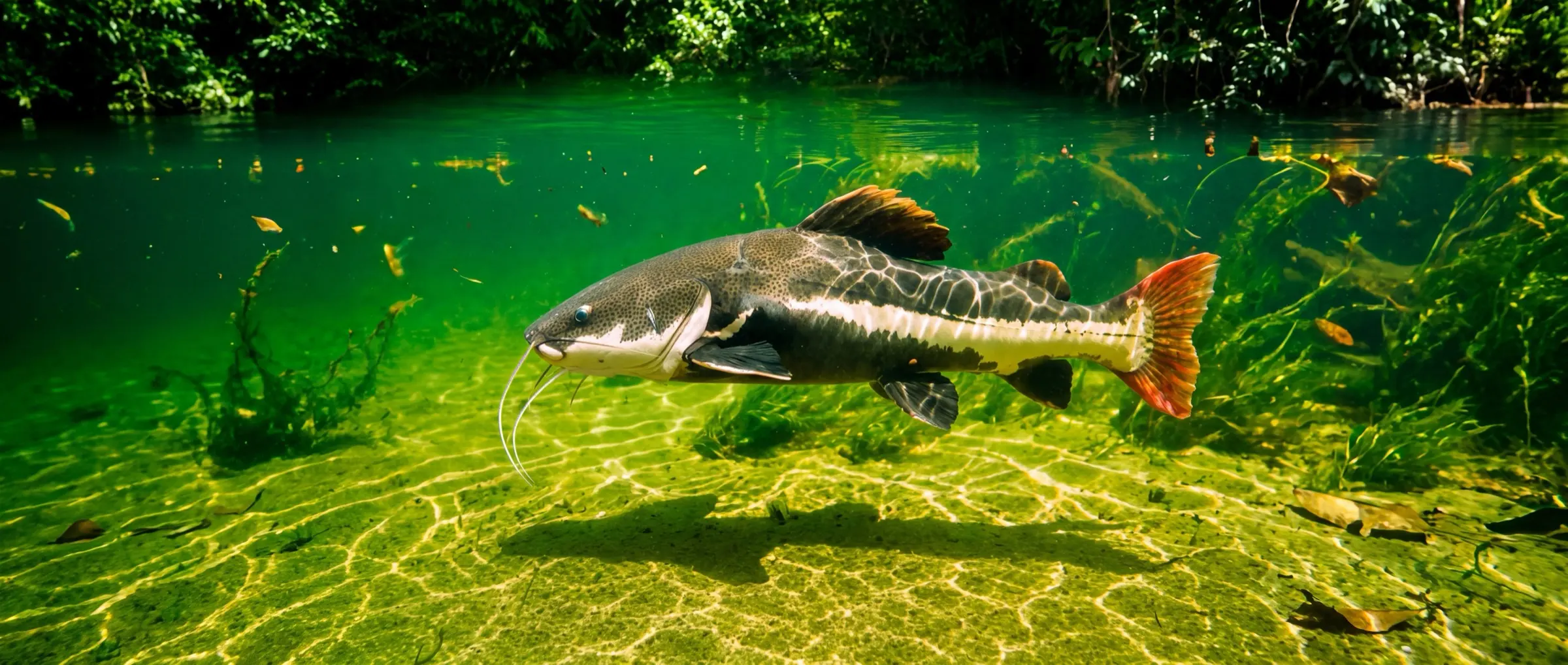
The largest specimen on record measured 134 to 135 cm, a little over 53 inches. The heaviest fish on record, caught on rod and reel in Brazil in 2010, was 55.4 inches and 123 pounds 7 ounces.
Wild fish caught day to day are mostly smaller, often around two feet, because catches include plenty of younger fish. Full-grown wild adults run from about three and a half to four and a half feet.
How big they get in a home or a public tank
Kept well in a big tank, a redtail reaches about three feet by seven years old and keeps going. Measured captive adults at nine years old: 46 inches (a female), 40 inches (a female) and 37 inches (a male).
So plan for three to four feet, with females at the top of that range.
Where "six feet" comes from
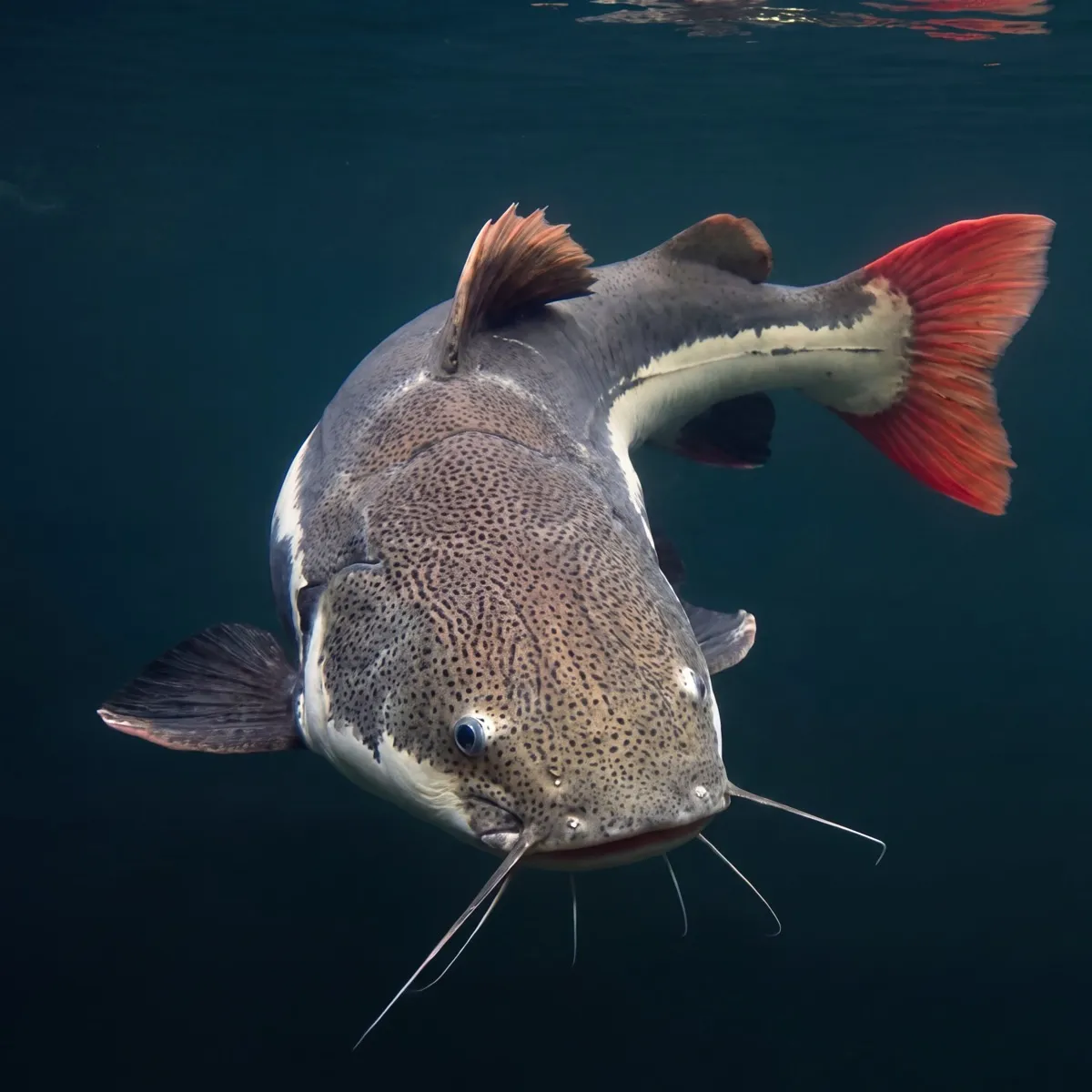
No fish this size has ever been measured. It is 45 cm longer than the largest specimen on record.
A redtail is big enough without it. A 46 inch fish weighs around 45 pounds; the record fish weighed more than a large dog. See the weight chart.